Peppermint Oil for Workout and Active Recovery
Discover how peppermint oil fits into your workout ritual. Explore cooling sensations, fresh breathing, and practical tips for active days. A practical guide.
By the AfterTheSport Team — Active-lifestyle & doTERRA enthusiasts
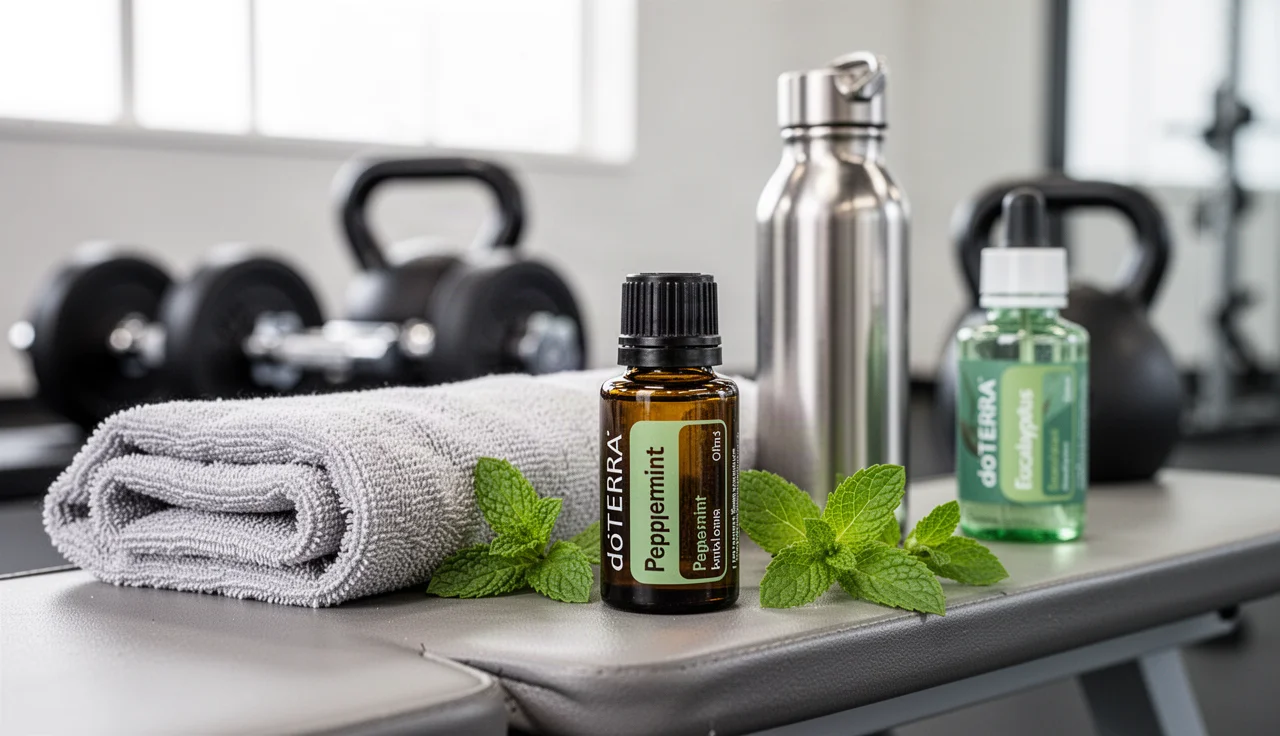
You set your gym bag down and realize the air still smells like yesterday's session. That stale, heavy feeling follows you into the warm-up. Before you reach for a synthetic spray, consider what a single bottle of Peppermint can do for your training space and your post-workout ritual. Many active people use peppermint as a sensory tool: a quick inhale for a fresh feeling, a diluted rub for a cooling sensation, and a diffuser blend to reset the room. It will not make you faster or stronger, and it will not treat soreness or injury. What it offers is a crisp, familiar scent that helps a workout space feel clean and a tired body feel refreshed. That is the honest, practical role this oil plays in an active lifestyle, and this guide walks you through exactly how to use it that way.
How Peppermint Fits Into a Workout Routine
Peppermint oil has a sharp, cool, and instantly recognizable aroma. In a workout context, that scent works best as an environmental cue. You smell it, and your brain associates it with the start or end of training. We recommend thinking of it as a ritual anchor rather than a performance tool.
A few practical ways to use it:
- Before training: put 3 drops in a diffuser for 30 minutes while you lace up.
- During training: keep a small bottle in your bag for an occasional fresh inhale.
- After training: dilute for a cooling body rub once you are done stretching.
- For your training space: add 3-5 drops per 100 ml of water in a diffuser to clear a stale room.
If you want a convenient, pre-diluted option for on-the-go use, Peppermint Touch rolls on without measuring. The roll-on format makes it easy to apply after a shower or between sessions. This is one of the first products we suggest to people who want the peppermint experience without mixing anything.
Peppermint, Eucalyptus, and Wintergreen Compared
Peppermint is not the only oil with a fresh, cooling profile. Knowing the differences helps you choose the right one for your gym bag.
| Oil | Aroma | Common active-lifestyle use | Format worth considering |
|---|---|---|---|
| Peppermint | Sharp, cool, minty | Fresh inhale, space reset, cooling rub | Peppermint Touch |
| Eucalyptus | Strong, clean, slightly camphor-like | Diffusing in a home training area | Standard 15 ml bottle |
| Wintergreen | Sweet, sharp, medicinal | Cooling massage blends for after activity | Standard 15 ml bottle |
Eucalyptus leans more toward a clean, clearing smell, while Wintergreen has a warmer, sweet-sharp edge. If you want a blend that combines several fresh oils in one, Breathe is worth a look. Its mix of mint, eucalyptus, and tea tree creates a clean, airy atmosphere with almost no measuring or mixing. We keep one in our training room for days when the space just feels heavy. Want a deeper look at how peppermint supports your whole routine? See Peppermint Oil for Your Workout Routine.
How to Use Peppermint Oil Safely Around Training
Essential oils are concentrated, and peppermint deserves respect. The menthol content makes it feel cool, but that same compound can irritate if misused. Follow this simple sequence every time.
- Patch test first. Mix 1 drop of peppermint with 1 teaspoon (5 ml) of a carrier oil. Apply a small amount to the inside of your elbow. Wait 24 hours. No reaction? Proceed.
- Dilute properly for the body. Use a 2-3% dilution: 2-3 drops of peppermint per 5 ml of carrier oil. We suggest jojoba on the face and fractionated coconut oil for the body and larger massage areas.
- Choose the right moment. Apply after training, never on broken skin or immediately before sun exposure. Peppermint itself is not a photosensitizer, but a fresh, cool rub right after a hot shower works best.
- Diffuse responsibly. Use 3-5 drops per 100 ml of water, run the diffuser for 30-45 minutes, then turn it off. Keep the room ventilated.
- Keep it away from the eyes. If peppermint gets into your eyes, flush with a carrier oil first, then water. Water alone can spread the cooling compounds.
For a ready-made cooling blend that fits into a post-workout ritual, Deep Blue and Deep Blue Rub combine wintergreen, camphor, and peppermint in a format designed for rubbing into tired areas. The sensory effect is a strong cooling sensation that many active people enjoy after a long session. It is not a pain treatment, and it will not speed recovery, but as part of a comfort ritual it has a clear appeal. Many people pair it with a few minutes of stretching and a glass of water. Research on essential oil use remains limited, and organizations like the National Institutes of Health emphasize that oils should complement, not replace, standard self-care.
FAQ
Can peppermint oil improve my workout performance?
No. Peppermint offers a fresh scent and a cooling sensation, but it does not increase strength, speed, endurance, or power. Some people feel more mentally alert after an inhale, which can make a session feel more focused, but that is a sensory experience, not a measurable performance boost.
How much should I dilute peppermint oil for a post-workout rub?
Use a 2-3% dilution: 2-3 drops of peppermint per 5 ml of carrier oil such as fractionated coconut or jojoba. Always patch test a small area first and wait 24 hours to check for sensitivity.
Is peppermint oil safe to use around the gym?
It can be, when used considerately. A few drops on a tissue or in a personal diffuser is usually fine, but strong scents affect people differently, and many gyms prohibit open aerosols or oils. In our experience, home use is the better fit, leaving shared training spaces unscented.
Conclusion
Peppermint oil earns its place in a workout bag as a simple sensory tool: a fresh smell, a cooling ritual, and a cleaner-feeling training space. It supports the experience of training without pretending to change your physiology. Used with proper dilution and realistic expectations, it is a small upgrade that makes an active routine feel a little more intentional.
This content is for general information only and is not medical advice. Essential oils are not intended to diagnose, treat, cure, or prevent any disease; consult a qualified healthcare professional before use.