Essential Oils for Athletes Recovery Routine
Discover how essential oils fit into a post-workout recovery routine. Cooling sensations, calming scents, and practical rituals for active lifestyles.
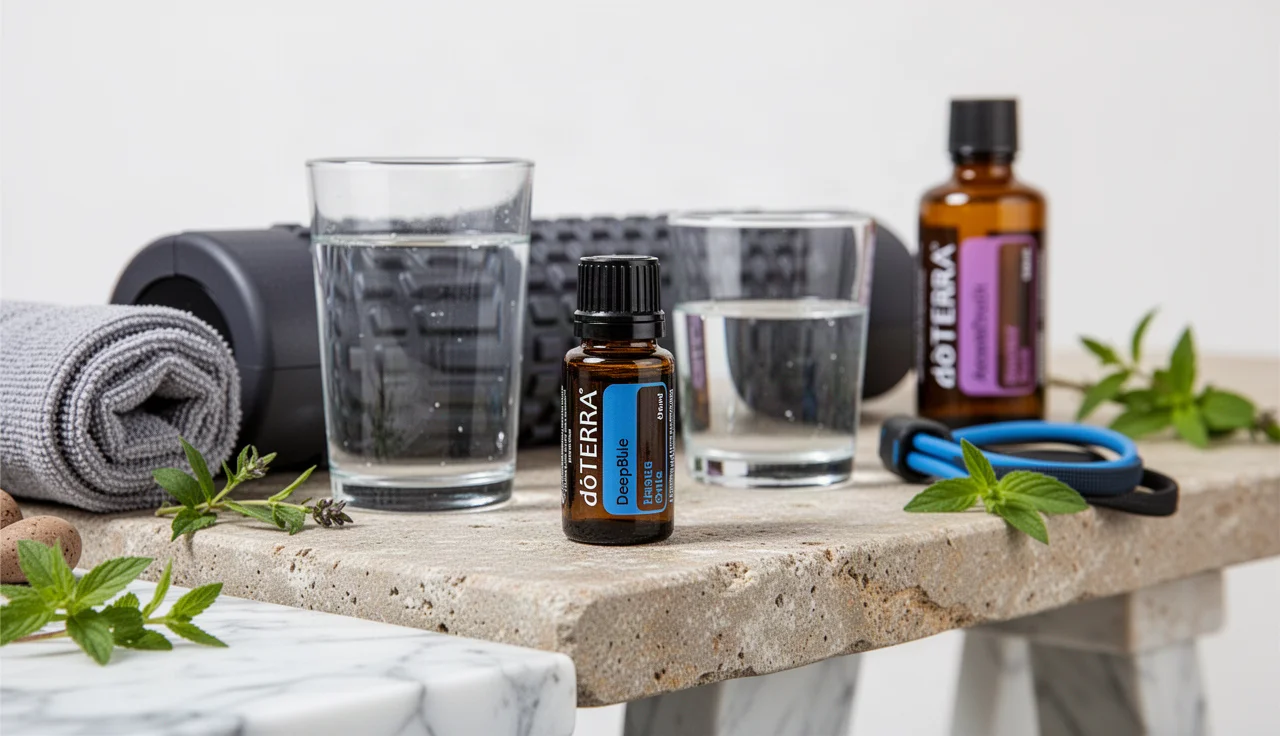
By the AfterTheSport Team — Active-lifestyle & doTERRA enthusiasts
You finish a hard training session, and the next thing you think about is how your body will feel tomorrow. The direct answer: essential oils do not heal muscles, speed tissue repair, or remove soreness. What they offer is a sensory ritual that makes the hours after training feel more intentional. A cooling sensation on tired legs, a calm scent while you stretch, a fresh environment while you rehydrate. Many active people keep a small kit in their gym bag for exactly that reason, not as a medical tool but as part of a comforting post-sport routine. This article covers which oils fit that ritual, how to use them safely, and what a realistic recovery routine looks like.
Building a Post-Workout Ritual That Feels Good
Recovery is mostly boring: sleep, water, food, and easy movement. Essential oils do not replace any of that. They make it more pleasant. A consistent after-training ritual helps you slow down, which is itself valuable. The routine below works because it is simple and repeatable, not because any single oil does something clinical.
What we recommend most often is pairing one cooling-feeling product with one calming scent. That covers the two moments athletes actually experience after training: the desire for a fresh sensation on the legs or shoulders, and the need to mentally switch off before the rest of the day.
Cooling Sensation Without Medical Claims
The Deep Blue blend is the most common starting point for athletes here. It contains wintergreen, camphor, peppermint, and blue tansy, among others. The sensation is cool and soothing to the skin, not a treatment for soreness. Think of it as the aromatic equivalent of a cold splash of water after a run.
The Deep Blue Rub offers the same scent profile in a convenient lotion stick format. Many people prefer it for targeted application on large muscle areas because it is less concentrated and easier to spread.
For a more personal blend, AromaTouch combines cypress, peppermint, marjoram, basil, grapefruit, and lavender. It is designed for massage, and that manual element matters more than the oil itself. The hands do the real work; the oil simply makes the massage glide.
The Recovery Routine, Step by Step
Here is a practical sequence that takes about 15 minutes. Adjust it to your training schedule.
- Shower or wipe down. Start clean so any diluted oil you apply sits on skin, not sweat and dirt.
- Mix your dilution at 2-3%. For body application on large muscles, that means 2 to 3 drops of essential oil per 5 ml of carrier oil. Coconut fractionated is a good default because it is light, stable, and does not stain clothing. Jojoba works well on the face or neck.
- Apply with slow, firm massage strokes. Spend at least a few minutes per leg or shoulder area. The pressure and warmth of your hands create the comforting effect; the oil adds scent and glide.
- Stretch for 10 minutes while the scent lingers. Pair the massage with static stretching. The combination feels more complete than either alone.
- Diffuse something calming during your cooldown. Three to five drops per 100 ml of water, run for 30 to 45 minutes, in a ventilated room. Do not run it continuously.
A Comparison for Quick Decisions
| Goal | Product | Format | Sensation |
|---|---|---|---|
| Cooling comfort after training | Deep Blue | Oil blend | Cool, minty |
| Easy targeted application | Deep Blue Rub | Lotion stick | Cool, smooth |
| Massage-friendly, balanced | AromaTouch | Oil blend | Floral, herbal |
| Post-training calm | Lavender | Single oil | Soft, floral |
| Fresh training environment | Peppermint | Single oil | Sharp, cool |
Scents for Different Training Moments
Before training and after training are not the same. Fresh, stimulating notes like Peppermint or Eucalyptus fit a warm-up or a morning session. Calmer notes like Lavender or Marjoram suit the evening stretching window. There is no right answer, just what you enjoy.
For travel and gym-bag convenience, Peppermint Beadlets offer a quick burst of minty freshness without any bottle or dilution. They dissolve in the mouth and are popular before a short session or during a busy day.
If you want a ready-made calming blend, Serenity combines lavender, cedarwood, and other soft notes. One drop diluted on the wrists or diffused during your post-training cooldown is enough.
We often suggest On Guard for gym bags in shared spaces. Its citrus and spice scent makes a locker or gym towel feel fresher.
Safety Notes That Actually Matter
Dilution is not optional. For adult body use, stay between 2 and 3 percent. That is 2 to 3 drops per 5 ml of carrier oil. Never apply essential oils to broken skin, abrasions, or irritated areas.
Citrus oils like Lemon or Bergamot are photosensitizing. Avoid sun or tanning beds for about 12 hours after applying them to exposed skin.
The cooling sensation from menthol and camphor is a sensory effect on thermal receptors. It is not an anti-inflammatory action. If you have persistent pain, swelling, or limited movement, see a doctor or physiotherapist rather than reaching for another oil.
For a deeper look at how oils fit into a training recovery routine, see our guide on doTERRA Oils for Athlete Training Recovery.
FAQ
Are essential oils a replacement for rest and hydration after training?
No. Essential oils do not hydrate, feed, or rest your body. They are a complementary ritual that makes the post-training window more pleasant, but sleep, water, and food remain the foundation of any recovery routine.
This content is for general information only and is not medical advice. Essential oils are not intended to diagnose, treat, cure, or prevent any disease; consult a qualified healthcare professional before use.